

Lower energy bills
Generate your own electricity and buy less from the grid. As a guide, our customers save from around £1,100 to £2,900 or more a year. Your proposal shows your own figures.
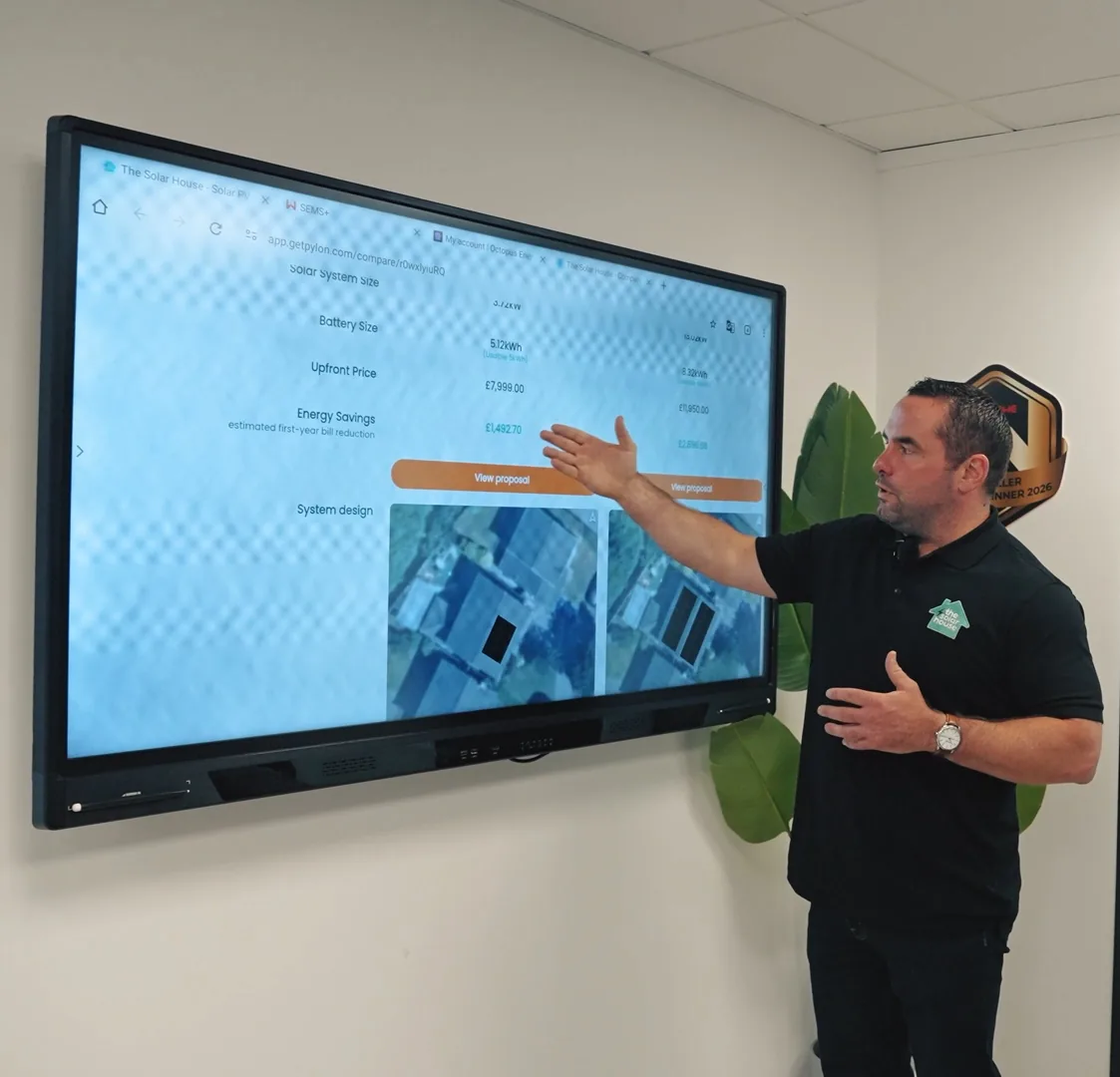
Deciding whether to invest in solar takes honest information and time to weigh it up. Our team talk you through the realistic costs and savings for your property, and answer your questions properly, so you can make the decision in your own time, with everything you need.
Book your showroom visit






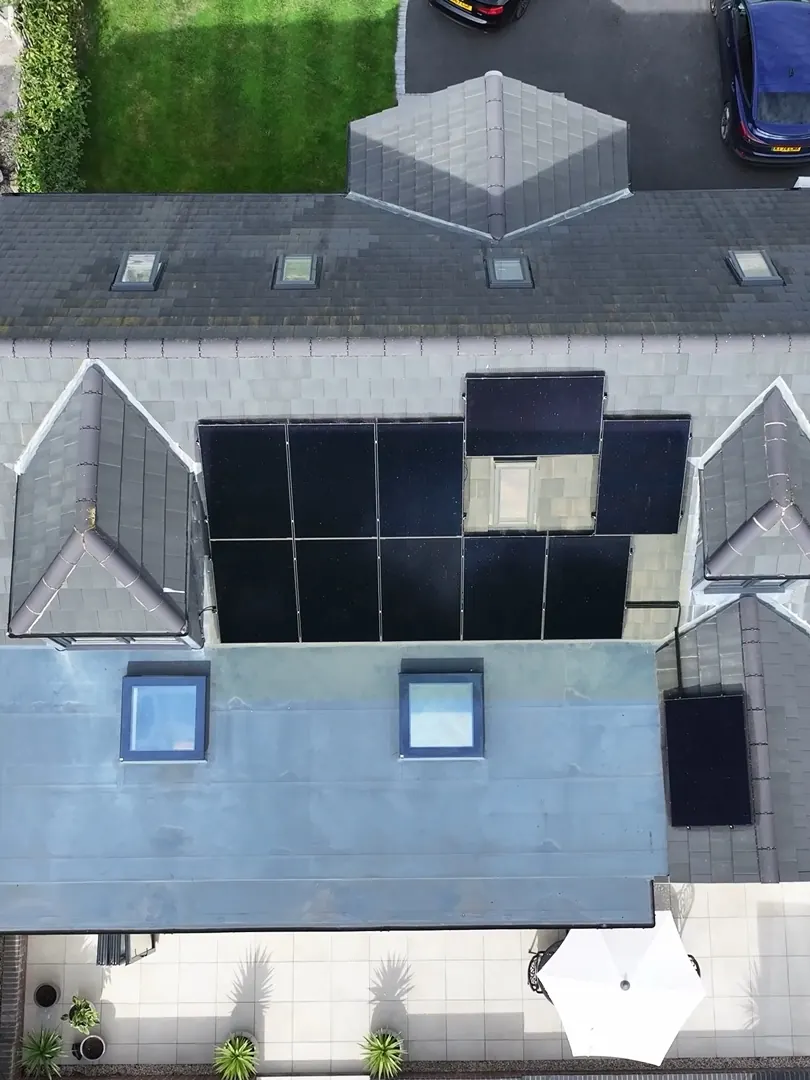
Solar works brilliantly for a lot of homes, and not so well for some. Roof direction, shading, how much electricity you use and how long you plan to stay all make a difference.
That’s exactly what our free assessment looks at, and it’s why we do it before anyone talks about buying anything. If your home isn’t a good candidate, we’ll tell you.
Solar could be suitable if:
Generate your own electricity and buy less from the grid. As a guide, our customers save from around £1,100 to £2,900 or more a year. Your proposal shows your own figures.

Every unit you generate is yours to use, store or send back to the grid. You'll buy less from the grid and feel the next price rise much less.

A well-designed system keeps generating for decades, and your proposal shows how long yours should take to pay for itself. Not many home improvements can say that.

Generating your own clean energy is one of the most effective changes a household can make. It’s a real, measurable cut in emissions, year after year.
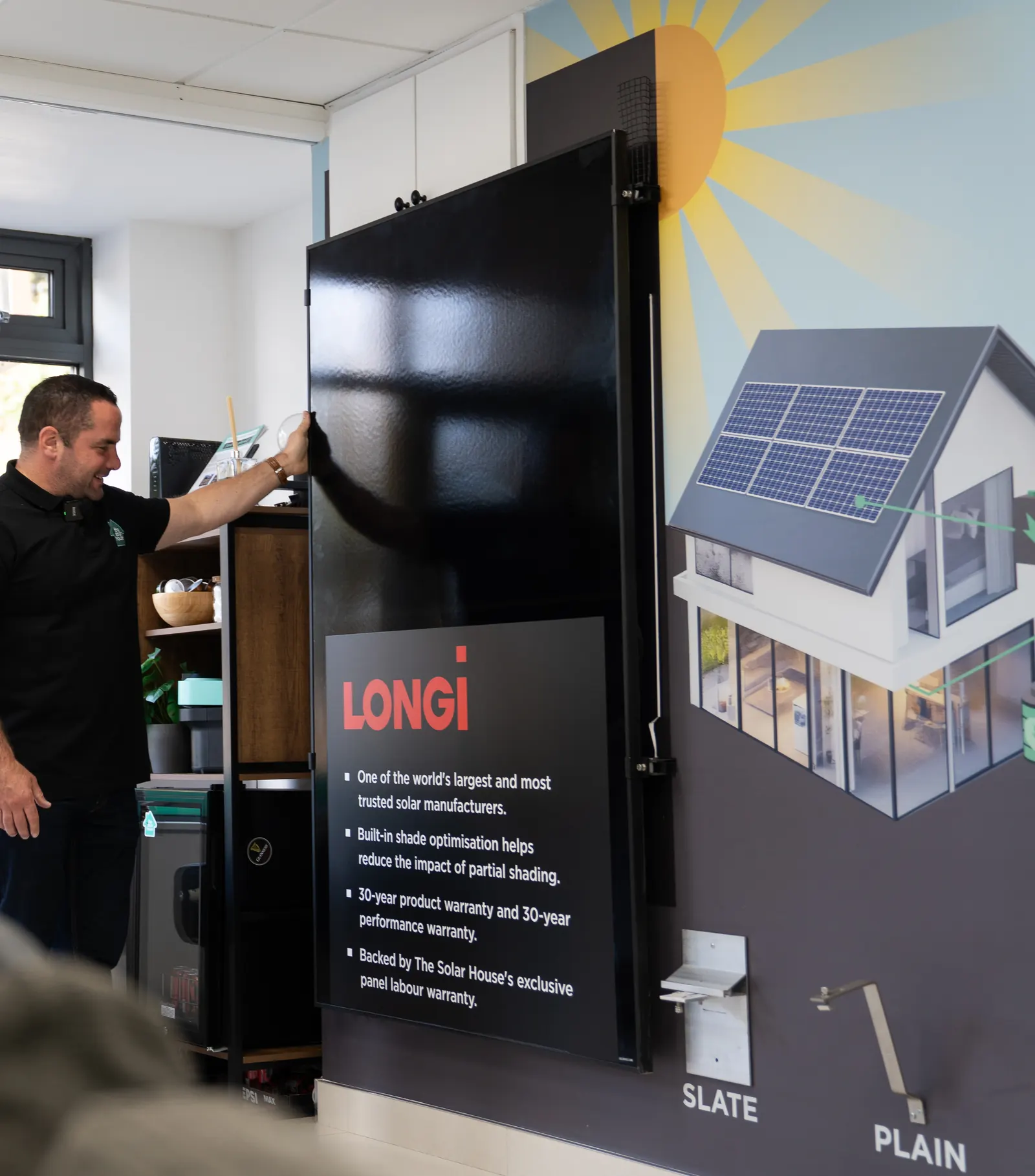
We use LONGi and AIKO solar panels because they offer the performance, reliability and long-term warranties we expect for our customers. Both are established manufacturers with technology designed to keep your system performing efficiently, even when conditions are not perfect.
 Shade optimisation • 30-year product warranty • 30-year performance warranty • Exclusive Solar House labour & access warranty
 Shade optimisation • 25-year product warranty • 30-year performance warranty
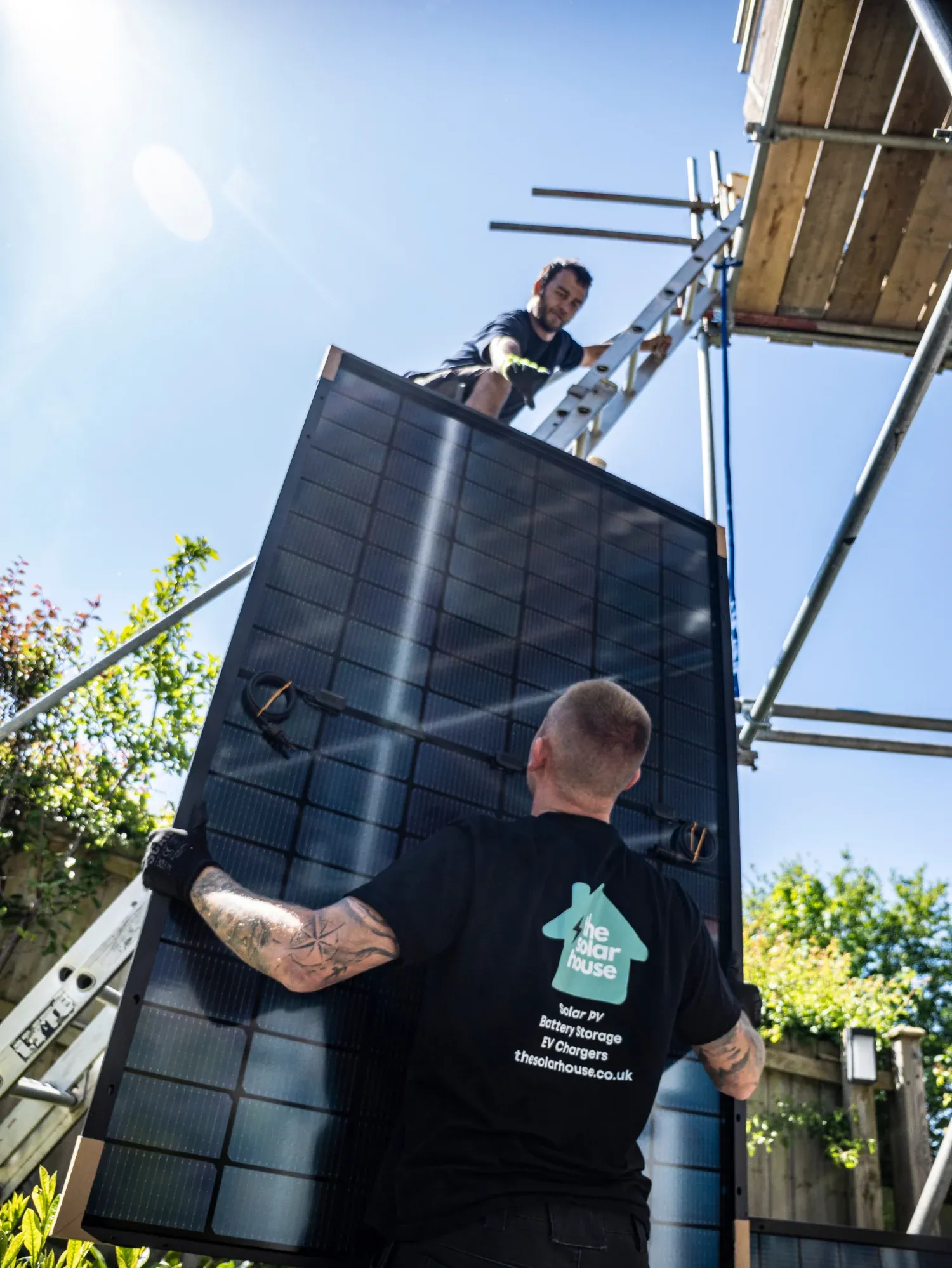
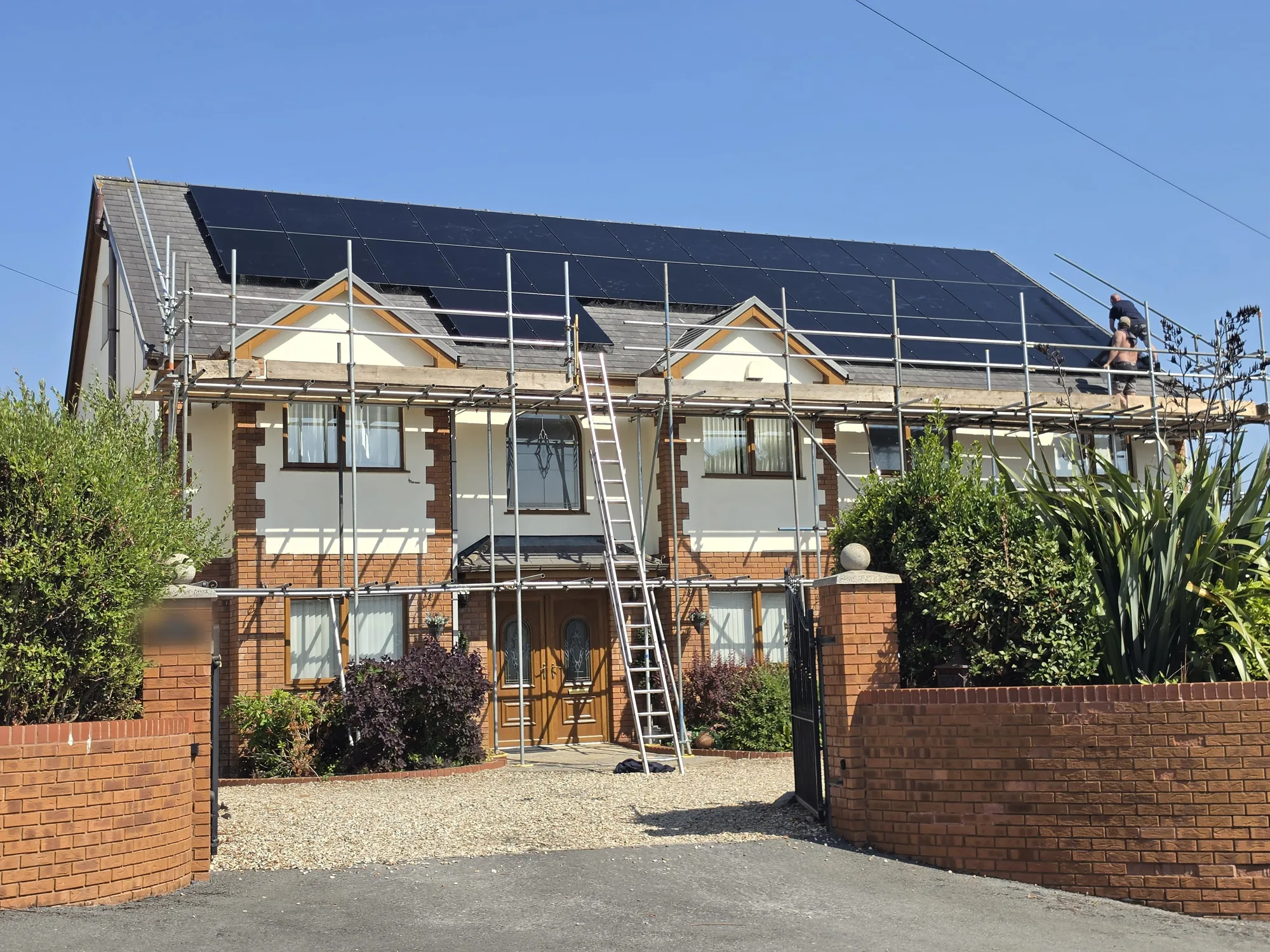
A full home energy upgrade: 34 LONGi panels, 27kWh of Tesla storage with whole-home backup, and a Hypervolt EV charger.
View project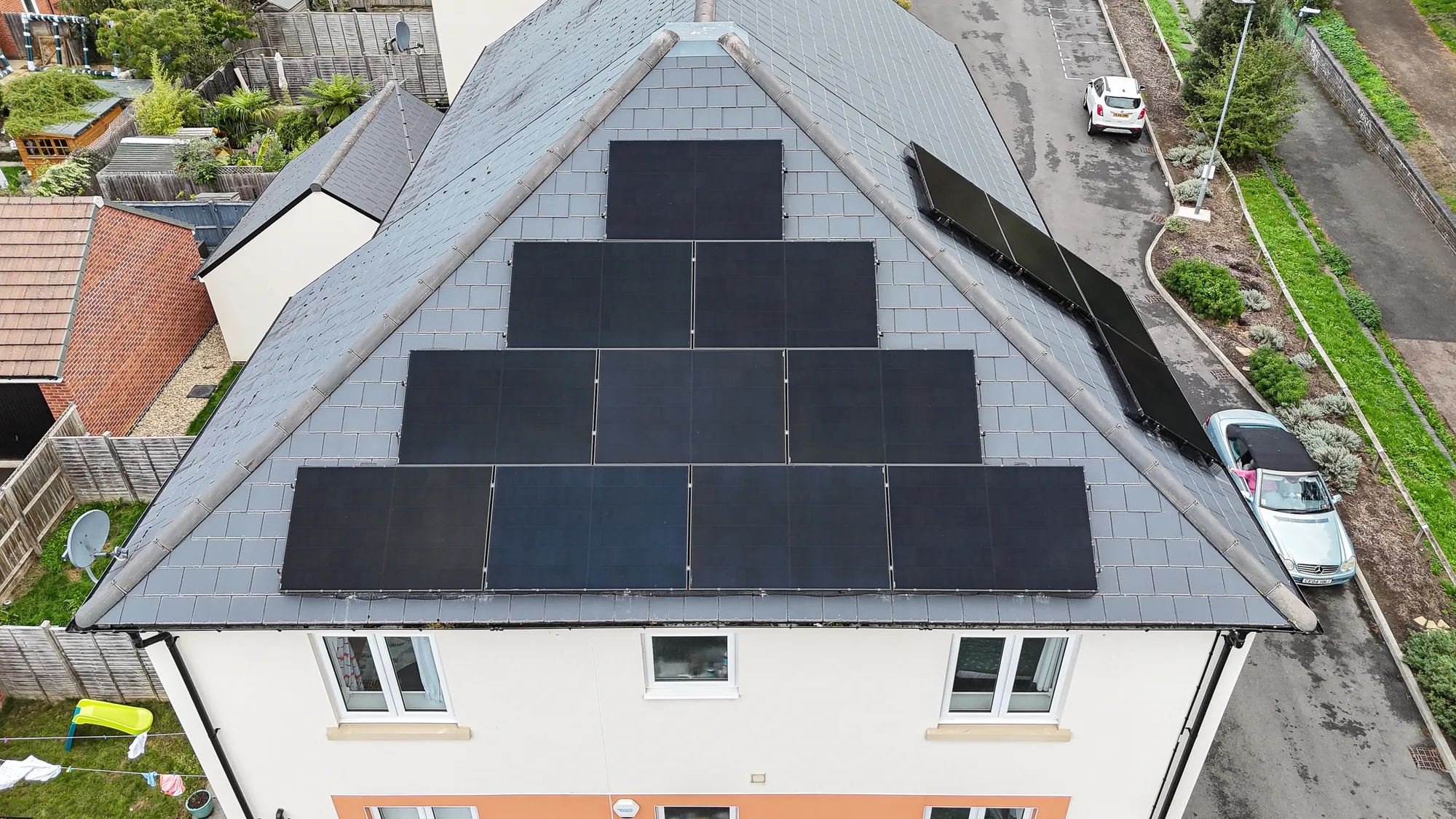
14 AIKO panels, three GoodWe batteries, a Hypervolt EV charger and a socket that keeps working in a power cut.
View project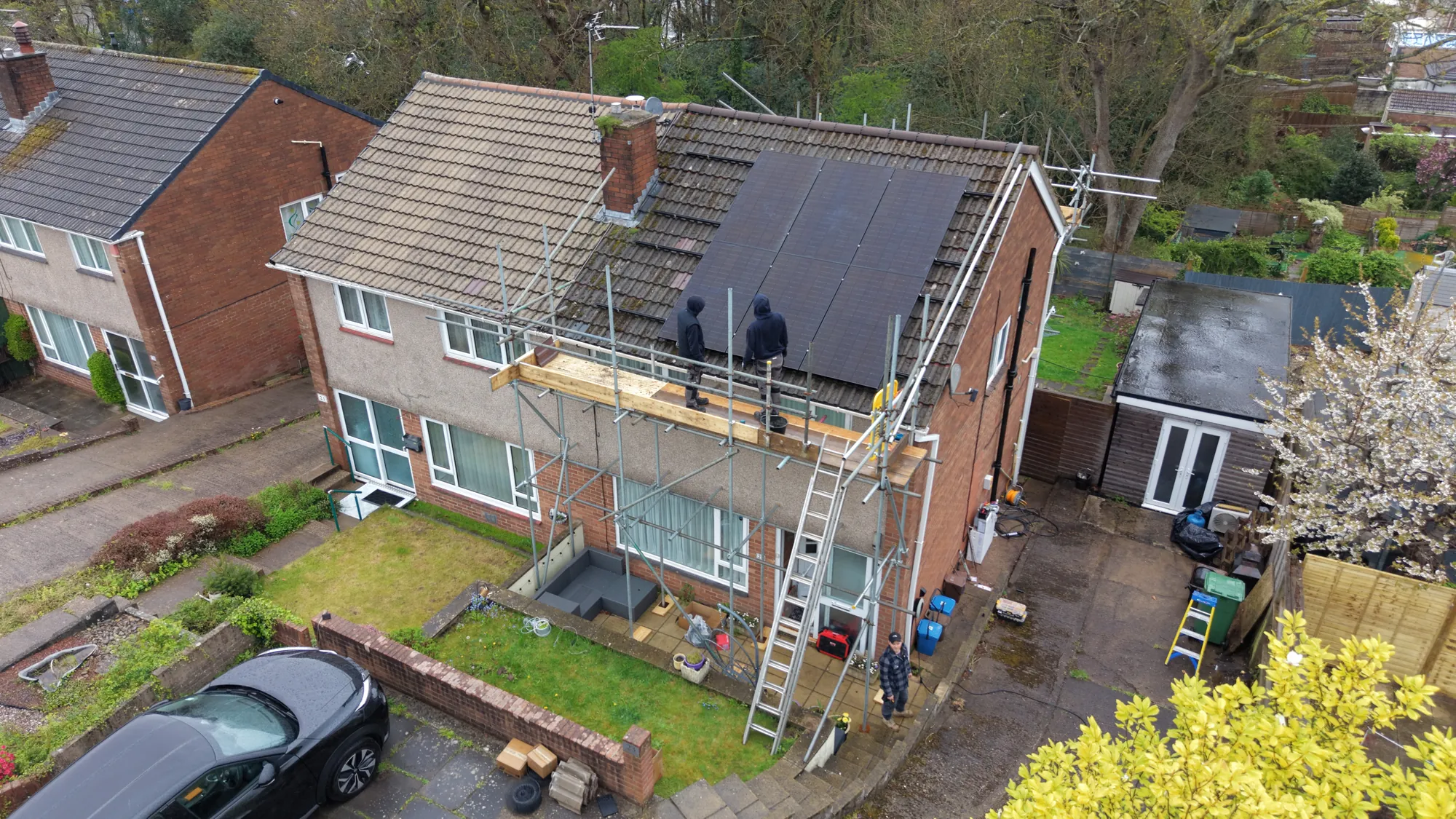
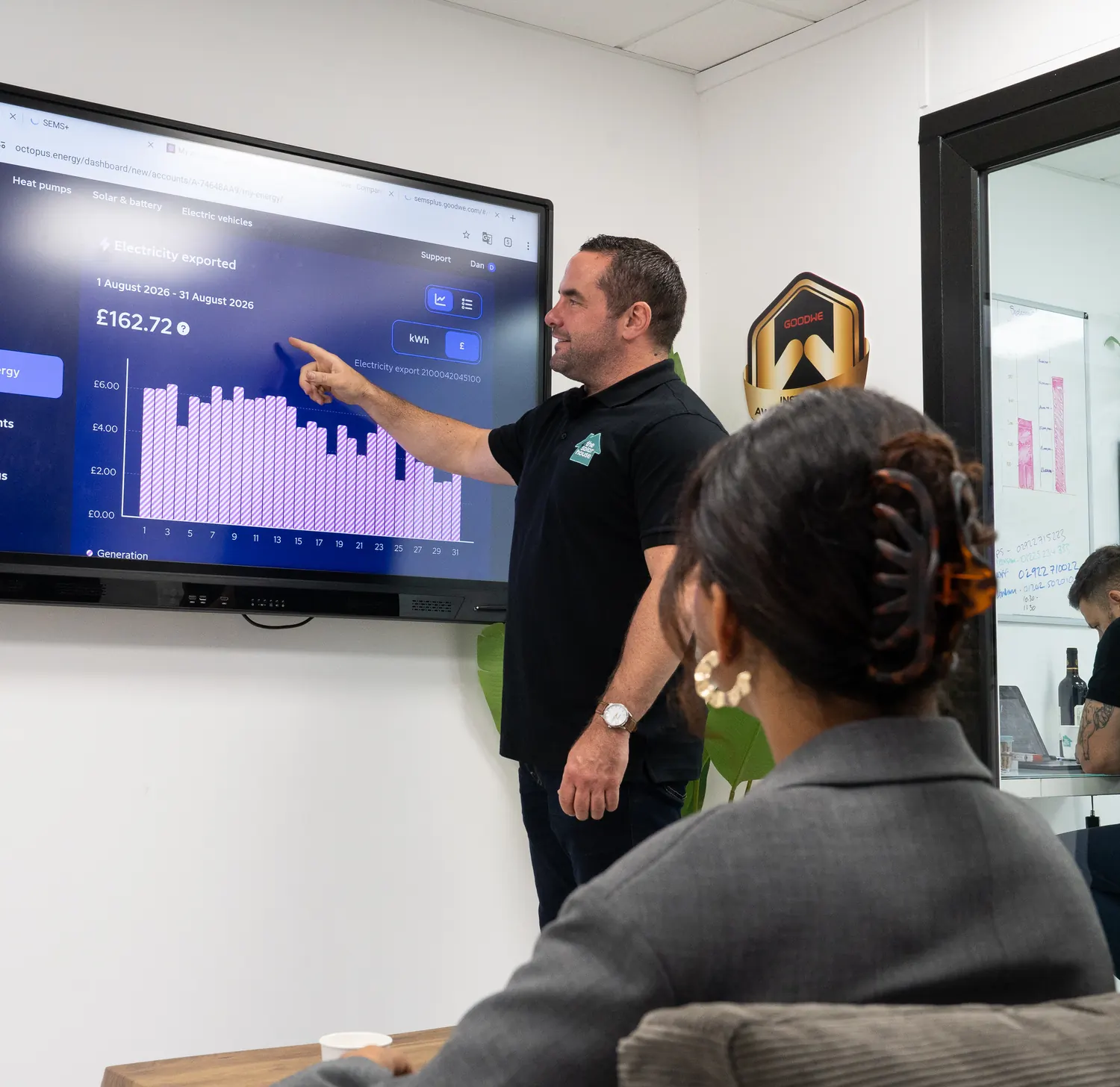
16 JA Solar panels and a 10kWh GoodWe battery on a Cardiff semi, fitted and switched on the same day.
View project

Every home is different, so we won’t pretend there’s one number that applies to everyone. As a guide: a typical terraced house with six panels and a small battery might save around £1,100 a year, while a large detached home with a bigger system can save £2,900 or more. Payback usually lands between four and seven years, and the panels keep working long after that.
The only way to know your number is to look at your home, your roof and your bills, which is exactly what our free Return on Investment Assessment does. There’s no obligation attached, and if the numbers don’t work for your property, we’ll be the ones to tell you.
Book your showroom visitMost roofs are. South-facing is best, but east and west-facing roofs work well too, and we'll check for shading from trees, chimneys or neighbouring buildings. If your roof isn't a good fit, we'll tell you rather than sell you something that won't deliver.
It depends on the size of the system, which way your roof faces and any shading. As a rough guide, each kilowatt of panels on a good roof in our area produces around 850 to 1,000 kWh a year. Your Return on Investment Assessment shows the figure for your own roof.
Usually not. Rooftop solar on most houses counts as permitted development. Listed buildings, some conservation areas and flats can be different, so we check before anything is agreed and help with the application if one is needed.
We mainly fit LONGi panels, and have also fitted AIKO and JA Solar. All are established manufacturers with long warranties: LONGi EcoLife panels carry a 30-year product and 30-year performance warranty, and the AIKO and JA Solar panels we've fitted a 25-year product and 30-year performance warranty.
Panels sit on aluminium rails fixed to the rafters with roof hooks that slip under your tiles or slates, so the roof stays watertight. Cables run neatly into the loft and down to the inverter. The layout is designed for your roof at the survey, so we know exactly where every panel goes.
A typical terraced house with six panels and a small battery might save around £1,100 a year, and a large detached home with a bigger system £2,900 or more. Payback usually lands between four and seven years. Our free Return on Investment Assessment works out the numbers for your home.