
Planning & regulations
Do you need planning permission for solar panels in England and Wales?
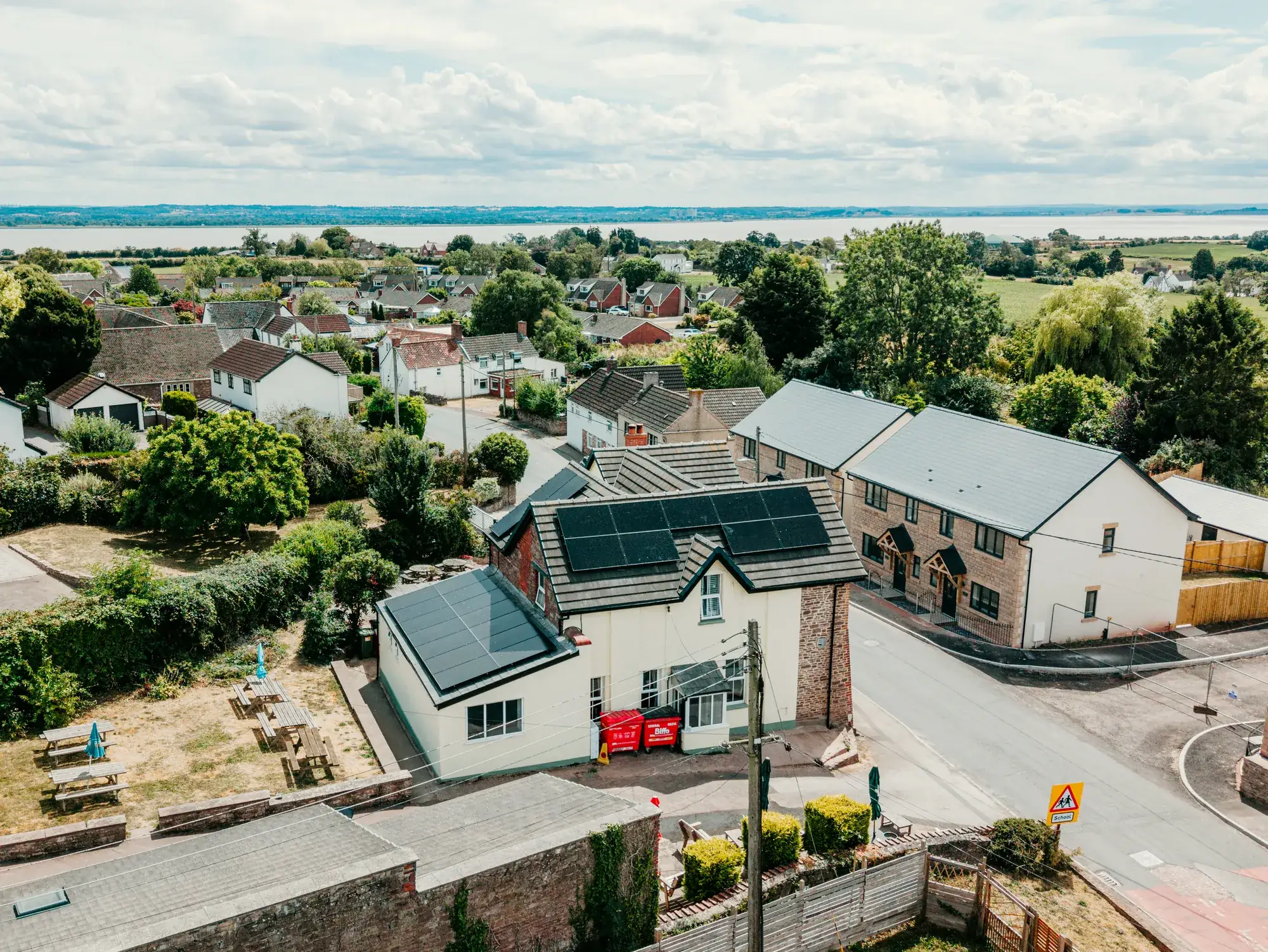
In most cases, no. In both England and Wales, fitting solar panels to the roof of a house is usually "permitted development", so you don't need to apply for planning permission as long as the installation meets set limits. The main exceptions are listed buildings, some walls in conservation areas, homes where an Article 4 direction removes these rights, and, in Wales, flats. Building regulations still apply either way.
- In England, rooftop solar on a house is permitted development under Part 14, Class A of the General Permitted Development Order 2015. On a pitched roof, panels must not stick out more than 0.2 metres from the roof slope or sit higher than the highest part of the roof, excluding any chimney (legislation.gov.uk).
- Since 21 December 2023, panels on a flat roof in England can be permitted development if they are no more than 0.6 metres above the highest part of the roof (SI 2023/1279).
- New English rules took effect on 27 August 2026, covering walls, balconies and plug-in solar. Anything permitted under the old rules can still be built under them until the end of 26 August 2027 (SI 2026/896).
- In Wales, panels must not be installed above the ridgeline or project more than 200mm from the roof or wall. Welsh Government says these rights apply to houses, not flats (GOV.WALES).
- Rooftop solar on a listed house isn't permitted development in England. In Wales, Welsh Government says a listed building needs planning permission and is likely to need listed building consent (legislation.gov.uk, GOV.WALES).
- An Article 4 direction can remove permitted development rights in a defined area, so a planning application is then needed (GOV.UK).
Do I need planning permission for solar panels in England?
Usually not. Under Part 14, Class A of the General Permitted Development Order, you can install solar panels on a house or on a building within its grounds, such as a garage, without applying. Two conditions apply: the panels must be sited, as far as practicable, to minimise their effect on the look of the building and the area, and they must be removed when no longer needed.
Pitched roofs
On a pitched roof, the panels must not stick out more than 0.2 metres from the roof slope. No part of them can be higher than the highest part of the roof, not counting any chimney. Most standard on-roof systems are designed to sit well within this.
Flat roofs
Since 21 December 2023, panels on a flat roof can be permitted development as long as their highest point is no more than 0.6 metres above the highest part of the roof, excluding any chimney. If your home is on "article 2(3) land", such as a National Park, conservation area, Area of Outstanding Natural Beauty or World Heritage Site, you first have to apply to the council for a decision on whether prior approval is needed for the panels' appearance.
Walls, balconies and plug-in solar
From 27 August 2026, the rules for houses and blocks of flats are set out separately. For a house, panels on a wall or a balcony or roof enclosure can stick out up to 0.4 metres. The limit is 0.2 metres where that wall or enclosure abuts a highway. The same order brought in a definition of "plug-in solar" (panels that connect to your home through a standard plug and socket). Plug-in solar can't be mounted on timber-clad walls or wooden balconies, fences or enclosures. There's a transition period: anything permitted under the old rules can still be built under them until the end of 26 August 2027.
Blocks of flats
Solar on a block of flats can also be permitted development in England, with a 0.2 metre limit from walls and roof slopes. It isn't permitted development if the block is listed. The Planning Portal notes that leaseholders may also need permission from their landlord, freeholder or management company.
What about conservation areas and other protected areas?
In England, living in a conservation area or World Heritage Site doesn't stop you fitting panels to your roof slope. What isn't permitted development is fitting them to a wall, balcony or roof enclosure that fronts a highway. As noted above, flat-roof panels on protected land also need the prior approval step.
In Wales, the 2012 Welsh order says panels in a conservation area or World Heritage Site are not permitted development on a wall that forms the principal or side elevation of the house and fronts a highway. Welsh Government's guidance describes this as walls visible from the highway.
Can I put solar panels on a listed building?
Possibly, but you'll need consent. In England, Class A permitted development does not apply to a listed house or a building within its grounds, so a planning application is needed. Welsh Government says installation on a listed building in Wales needs planning permission and is likely to need listed building consent. Panels are also not permitted development on a scheduled monument in either country.
What are the rules for solar panels in Wales?
Wales sets its own permitted development rules. According to Welsh Government's guidance and the 2012 Welsh order:
- panels on a wall or pitched roof must not project more than 200mm or sit above the highest part of the roof, excluding any chimney
- on a flat roof, panels must not be within 1 metre of the roof's outer edge or stand more than 1 metre above the roof
- panels should be sited to minimise their effect on the building and the area, and removed when no longer needed
- the rights apply to houses, so if you live in a flat, Welsh Government advises contacting your local planning authority
The 2023 and 2026 changes described above apply to England only.
What is an Article 4 direction?
A council (or, in England, the Secretary of State) can use an Article 4 direction to withdraw specific permitted development rights across a defined area. Where one applies, you need a planning application instead. Welsh Government notes that rights can also be removed by a condition on your home's original planning permission. Your local planning authority can tell you whether either applies. In England, if you want legal certainty, GOV.UK says you can apply for a lawful development certificate.
Do solar panels need building regulations approval?
Yes, building regulations apply even when planning permission doesn't. The Planning Portal and Welsh Government both say the roof's ability to carry the weight of the panels must be checked and proven, and that building regulations also cover the electrical work.
Installers registered with a government-authorised competent person scheme can self-certify this work instead of using building control (GOV.UK). In Wales, Welsh Government says a registered installer should give you a certificate of compliance with building regulations and notify the local authority. Separately, the MCS installation standard requires the installer to notify your electricity network operator (DNO) under the G98 or G99 procedures (MIS 3002).
We're an MCS certified installer and an NICEIC Approved Contractor, and we handle the MCS certification and the DNO notification or application for you.
What about home batteries and EV chargers?
The solar rules above cover panels only. In England, electric vehicle charge points have their own permitted development classes (Part 2, Classes D and E), which were last changed on 29 May 2025 (SI 2025/560). If you're adding a battery or an EV charger, ask us and we'll talk you through what applies to your home.
Where can I get advice?
Your local planning authority is the place to confirm the rules for a specific property, especially if it's listed or in a conservation area. You're also welcome to ask our team at any of our showrooms in Cardiff, Cheltenham and Melksham, or see our FAQs.
Questions people ask
Do I need planning permission for solar panels on my house?
Usually not, in England or Wales. Rooftop solar on a house is normally permitted development, provided the panels don't stick out more than 0.2 metres (200mm) from the roof slope or sit above the highest part of the roof. Listed buildings and some conservation-area walls are exceptions.
Can I have solar panels in a conservation area?
Usually on the roof, yes. In England, what isn't permitted development in a conservation area is fitting panels to a wall, balcony or roof enclosure that fronts a highway. In Wales, the restriction covers principal or side walls fronting a highway. An Article 4 direction can remove the rights altogether.
Are flat roof solar panels permitted development?
In England, yes since 21 December 2023, if they're no more than 0.6 metres above the highest part of the roof. Prior approval is needed on protected land. In Wales, panels must be at least 1 metre from the roof edge and no more than 1 metre above the roof.
Can I put solar panels on a flat or apartment?
In England, blocks of flats have their own permitted development rules, but leaseholders may need landlord or freeholder permission. In Wales, Welsh Government says the rights apply to houses, so flat owners should ask the local planning authority.
Do solar panels need building regulations approval?
Yes. The roof must be shown to carry the extra weight, and the electrical work must comply. An installer registered with a competent person scheme can self-certify the work instead of using building control.
Sources
- Town and Country Planning (General Permitted Development) (England) Order 2015, Schedule 2 Part 14 (revised text, up to date to 12 October 2026) legislation.gov.uk, checked 12 October 2026
- The Town and Country Planning (General Permitted Development) (England) (Amendment) Order 2026 (SI 2026/896) legislation.gov.uk, checked 12 October 2026
- The Town and Country Planning (General Permitted Development etc.) (England) (Amendment) (No. 2) Order 2023 (SI 2023/1279) legislation.gov.uk, checked 12 October 2026
- The Town and Country Planning (General Permitted Development) (England) (Amendment) Order 2025 (SI 2025/560) legislation.gov.uk, checked 12 October 2026
- Planning permission: solar equipment mounted on a house or a block of flats or on a building Planning Portal, checked 12 October 2026
- Solar panels: building regulations Planning Portal, checked 12 October 2026
- When is permission required? (Planning practice guidance) GOV.UK (MHCLG), checked 12 October 2026
- Competent person scheme: current schemes and how schemes are authorised (updated 17 September 2026) GOV.UK (MHCLG), checked 12 October 2026
- Roof and wall-mounted solar panels: planning permission Welsh Government (GOV.WALES), checked 12 October 2026
- The Town and Country Planning (General Permitted Development) (Amendment) (Wales) Order 2012 (WSI 2012/1346) legislation.gov.uk, checked 12 October 2026
- Building regulations: solar panels Welsh Government (GOV.WALES), checked 12 October 2026
- Building work: competent person schemes (updated 5 April 2023) Welsh Government (GOV.WALES), checked 12 October 2026
- MIS 3002 The Solar PV Standard (Installation), Issue 6.0 MCS, checked 12 October 2026