
Solar
Is my roof suitable for solar panels?
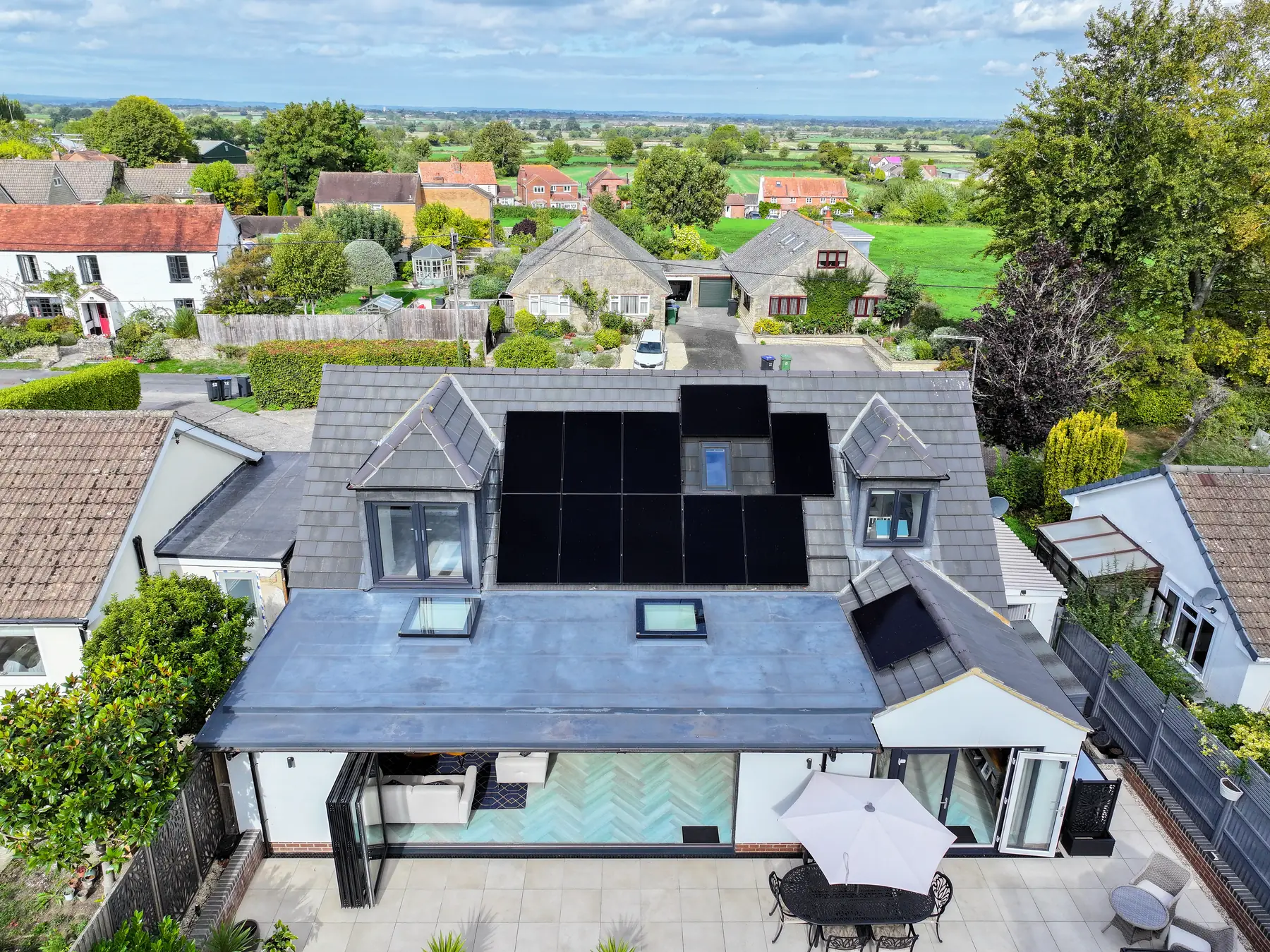
Most pitched roofs in South Wales, Gloucestershire and Wiltshire can take solar panels. How well a roof suits solar depends on four things: which way it faces, how steep it is, how much shade falls on it and whether the structure and covering are sound. The MCS (Microgeneration Certification Scheme) method turns the first three into a yearly generation estimate, and structural checks decide whether the roof can carry the panels.
- MCS's standard estimate is system size (kWp) × a kWh-per-kWp figure for your postcode zone, orientation and pitch × a shade factor (MCS MIS 3002, Issue 6.0, Appendix B).
- In MCS's table for postcode zone 5W, which includes CF, NP and most SA postcodes, a south-facing roof at 35° gives 949 kWh per kWp and an east- or west-facing roof at the same pitch gives 760, about 20% less (MCS irradiance datasets).
- The Energy Saving Trust says east- or west-facing systems tend to get around 15–20% less energy than south-facing ones, and it doesn't recommend north-facing roofs (Energy Saving Trust).
- MCS's shade method counts segments on a sun-path chart: each of its 84 segments is worth 0.01. MCS says the method gives results within 10% of actual yearly output for most systems (MCS MGD 005).
- MCS requires a competent person to check the roof can carry the system. Any unusual roof needs a qualified structural engineer (MIS 3002, clauses 5.9.4–5.9.6).
- The Energy Saving Trust says a typical 4.5kWp system covers 20 to 30m² of roof and usually uses around 12 panels (Energy Saving Trust).
Which way does my roof need to face?
MCS publishes tables of how many kilowatt-hours a year each kilowatt-peak (kWp) of panels should produce. There's one table for each UK postcode zone, with values for every 1° of pitch and every 5° of orientation. MCS says the figures come from the European Commission's PVGIS dataset multiplied by 0.8. That makes them deliberately cautious.
Here's what the MCS table for zone 5W gives for a roof pitched at 35°:
- South-facing: 949 kWh per kWp a year
- South-east or south-west: 896 kWh per kWp
- East or west: 760 kWh per kWp
- Almost due north (175° from south): 528 kWh per kWp
Most of our Gloucestershire and Wiltshire customers have GL, SN, BA or BS postcodes, which are in zone 5E. That table is slightly higher: 971 kWh per kWp facing south at 35° and 775 facing east or west. Some west Wales postcodes, including SA14–20, SA31–48 and SA61–73, fall into zone 13, where the same south-facing roof gives 922.
South gives the most over a year, but east and west roofs still produce a useful amount, with east generating more in the morning and west more in the afternoon. North-facing roofs produce much less.
Does the angle of my roof matter?
Less than most people expect. In the zone 5W table, a south-facing roof at any pitch from 30° to 45° gets between 943 and 949 kWh per kWp. The highest value in the table is 950, at 39°. Go shallower and the figure drops gently: 915 at 20° and 867 at 10°.
A shallow pitch actually narrows the gap for east and west roofs. At 20°, an east or west roof gets 788 kWh per kWp, about 14% less than south. At 45° it gets 730, about 23% less.
MCS treats a roof under 10° as flat. The Energy Saving Trust says panels on flat roofs are normally tilted up on frames.
How much does shade affect solar panels?
MCS estimates shade with a sun-path chart showing where the sun is across the day and the year. The installer draws the outline of trees, buildings and other obstructions onto the chart. Each of the chart's 84 segments that the outline touches or covers takes 0.01 off a perfect score of 1. In MCS's own example, an obstruction touching 11 segments gives a shade factor of 0.89, which means about 11% less generation.
Objects within 10 metres, such as chimneys, vent pipes, dormers and satellite dishes, are treated more strictly because they cast bigger shadows for longer. When MCS moves the same obstruction from its example to within 10 metres, the shade factor falls from 0.89 to 0.6. MCS says solar shouldn't be sold where the impact of shade could be severe.
Devices fitted to each panel, such as optimisers, can reduce the effect of partial shade. MCS's shade method doesn't count their benefit, because results vary between projects. We fit optimisers where a roof has shading. Where the shade factor is below 1, MCS requires your quote to say so in writing.
Is my roof in good enough condition?
MCS says a solar system should not harm the weather-tightness or structural integrity of your roof for the life of the system. Panel warranties now run to 25 or 30 years, so think about the roof over the same timescale. If the covering is near the end of its life, replacing it first usually makes more sense than lifting panels later. The Energy Saving Trust notes that scaffolding already up for roof repairs can lower installation costs.
If your roof covering is still under warranty, MCS says the installer should ask the roof warranty provider whether solar would affect it. If the warranty could be invalidated, the installer must tell you in writing and get your explicit written agreement before going ahead.
Does my roof material matter?
- Tiles and slates: Panels sit on brackets fixed to the roof structure. Where needed, tiles or slates are notched or flashed so the installation doesn't leave bigger gaps than there were before (MIS 3002, clause 5.9.8).
- Metal roofs: The sheet thickness, its fixings to the structure below and its resistance to extra wind uplift all have to be checked (clauses 5.9.9–5.9.10).
- Flat roofs: Mechanically fixed systems on a solid deck need a condition survey and pull-out tests. Systems held down with ballast need a qualified structural engineer to confirm the roof can carry the panels and the ballast (clauses 5.9.12–5.9.13).
- In-roof systems: These replace part of the roof covering, so the kit must have the right fire performance rating for its position on the roof (clause 5.8.1).
What structural checks are needed?
Under MIS 3002, the installer must have a suitably competent person check that the roof structure can take the load. For common roof types, such as modern trussed rafters and gable-ended cut roofs, MCS sets out standard calculation methods. A qualified structural engineer must be consulted where the roof is unusual or there is any doubt, for example:
- cut roofs with hips or valleys, or asymmetric roofs
- signs of structural distress
- later alterations, such as removed timbers or a heavier replacement covering
- a pitch below 30°
- features that let snow build up, such as dormers, valleys and parapets
MCS also says panels should not sit within 400mm of any edge of a domestic roof unless extra measures handle the higher wind uplift there. That affects how many panels fit on a small or hipped roof.
What about listed buildings and conservation areas?
Rooftop solar on most houses doesn't need planning permission, but listed buildings, some conservation areas and flats are treated differently, and the rules in England and Wales are not the same. Our guide to planning permission for solar panels explains the details.
What does a real estimate look like?
As one example, a 6.75kWp system spread across three roof faces on a home in Cardiff has an MCS estimate of 5,190 kWh a year. That's one home's estimate, not a typical figure. MCS requires every estimate to say it is guidance for the first year only and not a guarantee, because sunlight varies from place to place and year to year.
How do we check your roof?
Every quote we give includes an MCS-method generation estimate. It's based on an in-person technical survey of your roof's orientation, pitch, shading and structure, which we carry out after a free showroom visit. You won't be asked to sign anything on the day of a showroom visit. If you'd like to know whether your roof is suitable, visit one of our showrooms or read more about our solar panels.
Questions people ask
Can I put solar panels on a north-facing roof?
You can, but it produces much less. In the MCS table for zone 5W (CF, NP and most SA postcodes), a roof facing almost due north at 35° gives 528 kWh per kWp a year, against 949 for a south-facing roof. The Energy Saving Trust doesn't recommend north-facing roofs.
Are east- and west-facing roofs worth it?
They usually still work. The Energy Saving Trust says they tend to get around 15–20% less energy than a south-facing roof. In the MCS zone 5W table at 35°, east or west gives 760 kWh per kWp, against 949 facing south.
What is the MCS shade factor?
It's a number between 0 and 1 that reduces the generation estimate to allow for shade. The installer draws obstructions onto an 84-segment sun-path chart, and each segment touched takes 0.01 off. Objects within 10 metres are counted more strictly.
Will my roof need a structural engineer?
Not always. MCS requires a competent person to check every roof. A qualified structural engineer is needed for unusual roofs, such as those with hips or valleys, signs of distress, later alterations, a pitch below 30° or features where snow can build up.
Should I replace my roof before installing solar?
If the roof covering is near the end of its life, it's usually better to replace it first, because the panels are designed to stay in place for decades. MCS says the system shouldn't harm the roof's weather-tightness for its whole life.
Sources
- MIS 3002 The Solar PV Standard (Installation), Issue 6.0 (18/03/2026) MCS, checked 12 October 2026
- MIS 3002:2025 Solar PV Installation Standard, Issue 2.0 (18/03/2026) MCS, checked 12 October 2026
- Irradiance Datasets (kWh/kWp tables by postcode zone) MCS, checked 12 October 2026
- MGD 005 Solar PV Shade Evaluation Procedure, Issue 1.0 MCS, checked 12 October 2026
- Solar panels: costs, savings and benefits explained (last updated 1 October 2026) Energy Saving Trust, checked 12 October 2026